
Wallpaper has a reputation in Bangkok. Ask a few condo owners and someone will have a story about a bedroom wall that bubbled, peeled at the seams or turned out to have black mould behind it. Ask a few interior designers and they will show you a decade-old feature wall that still looks perfect.
Both are true. In a climate this humid, wallpaper is not a universal finish. It works beautifully on some walls and fails predictably on others. Here is how to tell which is which, and when paint is simply the better answer.
The short version
- Interior wall, dry, sound plaster: wallpaper is a good choice. Use non-woven.
- Outside wall of an air-conditioned room: paint. If you must paper it, use a breathable non-woven paper, never vinyl.
- Bathroom with a shower, or the kitchen: paint with an anti-mould, washable finish, or tile.
- A rental: paint, possibly with one feature wall in panels or wallpaper.
- A wall that has ever had a damp stain: fix the damp first, then decide.
Why humidity is the real issue
Bangkok's outdoor air is warm and humid for most of the year. Indoors, air-conditioning makes the room cool and dry. The wall in between sits at the boundary.
Moisture moves from warm humid air towards cool dry air, so it travels from outside into the wall. On an outside wall of an air-conditioned bedroom, that moisture reaches the inside face of the wall, which is cool. If that face is covered with a vinyl wallpaper — essentially a thin plastic sheet — the moisture cannot pass through into the room. It collects behind the paper, in the paste. Paste is food for mould. Months later, you see black spots at the seams or a musty smell, and the back of the paper is covered.
This is why the same wallpaper can last ten years on an inside wall between two bedrooms and fail in two rainy seasons on the window wall. The difference is not the installer or the brand. It is whether moisture has a way out.
Paint, by comparison, is usually vapour-permeable. Moisture that reaches the inside of the wall can pass through it into the room, where the air-conditioning removes it.
The US EPA's guidance on mould puts the principle simply: the key to mould control is moisture control, and indoor humidity should ideally stay between 30 and 50 percent (EPA, A Brief Guide to Mold, Moisture and Your Home). In a Bangkok room, the wall finish decides whether moisture can escape or gets trapped.
Which wallpaper to choose
Not all wallpaper behaves the same way in humidity.
| Type | How it behaves in Bangkok | Best use |
|---|---|---|
| Non-woven (fleece) | Breathable, stable, does not shrink at seams, strips off in one piece | Most feature walls and bedrooms |
| Paper-backed | Absorbs moisture, seams can open and edges curl | Dry, well air-conditioned inside walls only |
| Vinyl or vinyl-coated | Washable and tough, but traps moisture | Inside walls only; never an outside wall of a cooled room |
| Fabric or grasscloth | Beautiful, absorbs moisture and stains | Dry rooms, low-touch walls |
| Peel-and-stick | Adhesive softens in heat and humidity, edges lift | Short-term decoration, not a renovation |
For most Bangkok condos, non-woven wallpaper is the safe default. It looks like paper, lets the wall breathe, does not stretch when pasted, and when you want a change it comes off in strips without tearing the plaster.
Wallpaper vs paint, compared
| Factor | Paint | Wallpaper |
|---|---|---|
| Cost | Whole room from ฿5,900; whole studio from ฿12,900 | From about ฿590 per m²; one feature wall from ฿4,900 |
| Time | About a day per 35–40 m² of floor area, plus drying | About two hours for a 3 × 2.5 m wall, no drying time |
| Pattern and texture | Colour only | Pattern, texture, depth |
| Hides small wall flaws | No, shows them | Partly, if heavy or textured |
| Humidity | Breathes; anti-mould ranges available | Depends on type and wall |
| Repairs | Touch up with the same colour code | Needs a spare roll from the same batch |
| Cleaning | Washable ranges wipe clean | Vinyl wipes; paper and fabric do not |
| Removal | Paint over | Strip, then repair the plaster |
| Rentals | Ideal | Risky: tenants scratch and tear it |
The hidden step: the wall underneath
Wallpaper is honest about one thing. It shows every problem with the wall under it — eventually.
Before hanging any paper, the wall has to be:
- dry, checked with a moisture meter, not by touch
- sound, with no flaking paint or powdery plaster
- smooth, with holes filled and sanded flat
- sealed, with a primer so the paste does not soak into the plaster unevenly
A wall with a damp stain, bubbling paint or a crack that keeps reopening will push the paper off, however good the paper. Fixing that first is the same work as preparing for paint. Our guide to prepping damp and cracked condo walls explains each step, and wall repair prices start from ฿2,900 per wall.
Which walls to paper, room by room
Living room. The TV wall or the sofa wall is the classic feature wall. If it is an inside wall, wallpaper is excellent. If it is the window wall, choose paint or fluted wall panels instead.
Bedroom. The headboard wall is usually an inside wall and a good place for wallpaper. Keep the outside wall painted.
Kitchen. Paint with a washable finish. Grease and steam are hard on wallpaper.
Bathroom. Paint with an anti-mould finish, or tile. A dry guest toilet without a shower can take a wet-room-rated vinyl, but it is rarely worth the risk.
Children's rooms. Paint with a scrubbable finish wins for practicality. One papered wall above head height is a nice compromise.
Rentals. Paint the unit in one neutral colour you can touch up between tenants. If you want one wall that photographs well for the listing, a panel or a non-woven paper is a sensible upgrade.
Signs your wallpaper has a problem
- seams opening or edges curling
- bubbles that appear after rain or after the air-conditioning is switched off for a few days
- yellow or brown staining coming through
- a musty smell in a closed room
- black specks at the seams or near the floor
Any of these on an outside wall usually means moisture behind the paper. Peel back a corner. If the back of the paper or the plaster is dark, the paper needs to come off, the wall needs treating and drying, and the finish should be reconsidered. Our sealing and anti-mould treatment starts from ฿1,900 per room and includes a moisture reading so the cause is recorded, not just cleaned.
Can you paint over wallpaper?
You can, and people do in rentals. It rarely ends well. Water-based paint softens the paste, the paper bubbles at the seams, and the next owner faces a much harder strip. If you are tired of the paper, strip it, fill and sand the plaster, prime and repaint. It costs a little more once and gives a wall you can repaint for years.
Getting it done
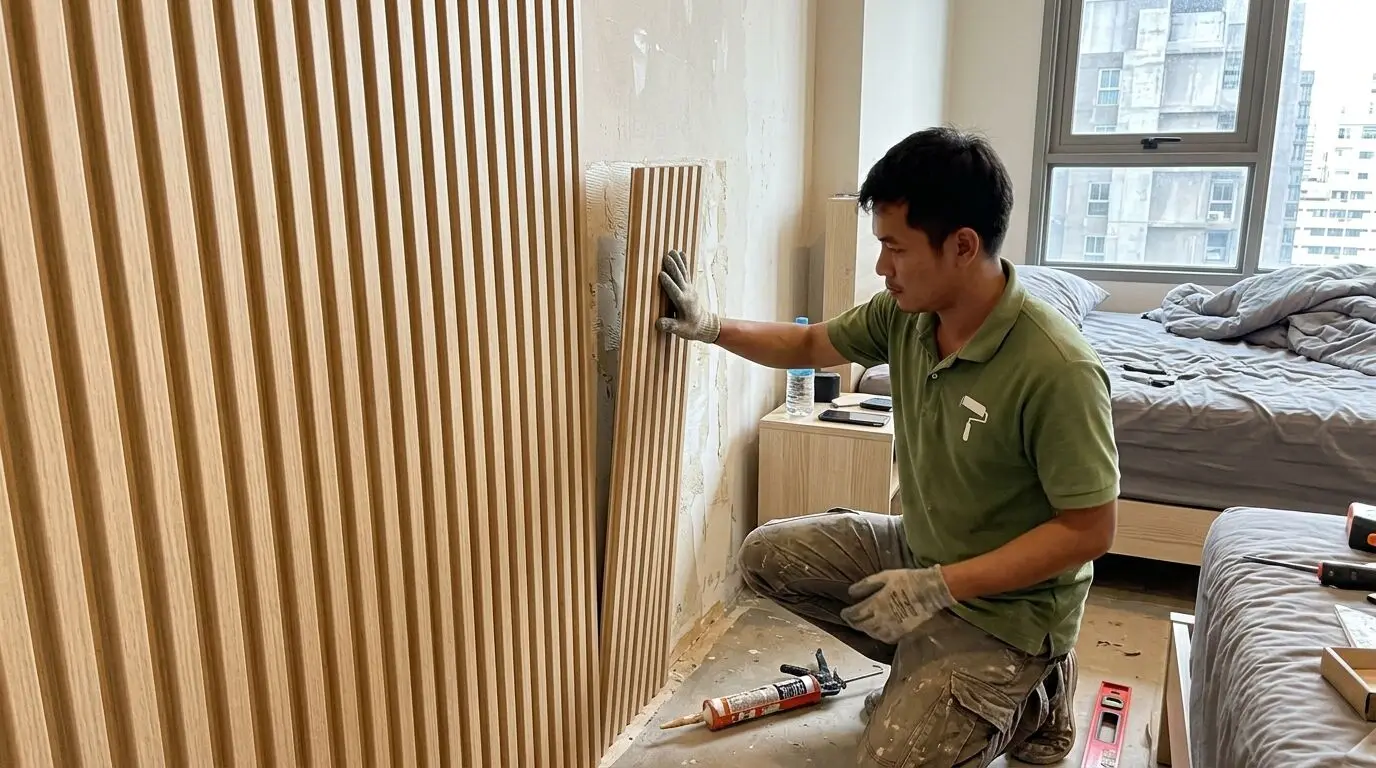
RenoRova hangs non-woven and vinyl wallpaper and fits WPC panels, measured and sampled in your light first. Every wall gets a moisture reading before anything goes up, and the report records the product code so a future repair matches. See wall panels and wallpaper for prices, or interior painting if paint is the right answer. Send a photo of the wall on LINE and the crew will tell you which finish suits it before you book.
Frequently asked questions
Does wallpaper work in a humid climate like Bangkok?
Yes, on the right walls with the right paper. Breathable non-woven wallpaper on dry interior walls lasts well. Problems come from vinyl paper on air-conditioned outside walls, papers hung on damp walls, and peel-and-stick products that soften in heat.
Is wallpaper or paint cheaper in Bangkok?
Paint is cheaper across a whole room. Wallpaper is installed from about ฿590 per m², and a single feature wall from ฿4,900. A full room repaint starts from ฿5,900, and a whole studio from ฿12,900.
What are the disadvantages of wallpaper?
Seams can lift in humidity, repairs need a spare roll from the same batch, removal can damage the plaster underneath, and the wrong wallpaper on the wrong wall can hide mould. It also shows every bump if the wall is not prepared.
Can you put wallpaper in a bathroom in Thailand?
It is not recommended in a bathroom with a shower. Steam and splashes lift seams and feed mould. Use anti-mould paint or tile instead, or a vinyl product specifically rated for wet rooms in a guest toilet without a shower.
Can you paint over wallpaper?
You can, but it often bubbles at the seams and makes the paper harder to strip later. Removing the paper, repairing the plaster and painting properly gives a better and longer-lasting result.
Need it handled professionally?
Get a guide price for your home in under 60 seconds.
Written by the RenoRova Team
We're Bangkok's documented renovation crew — everything we write comes from real painting, regrouting and flooring jobs across condos, homes and short-stay rentals.
Get our Bangkok renovation guides straight in Google — add RenoRova as a preferred source.