
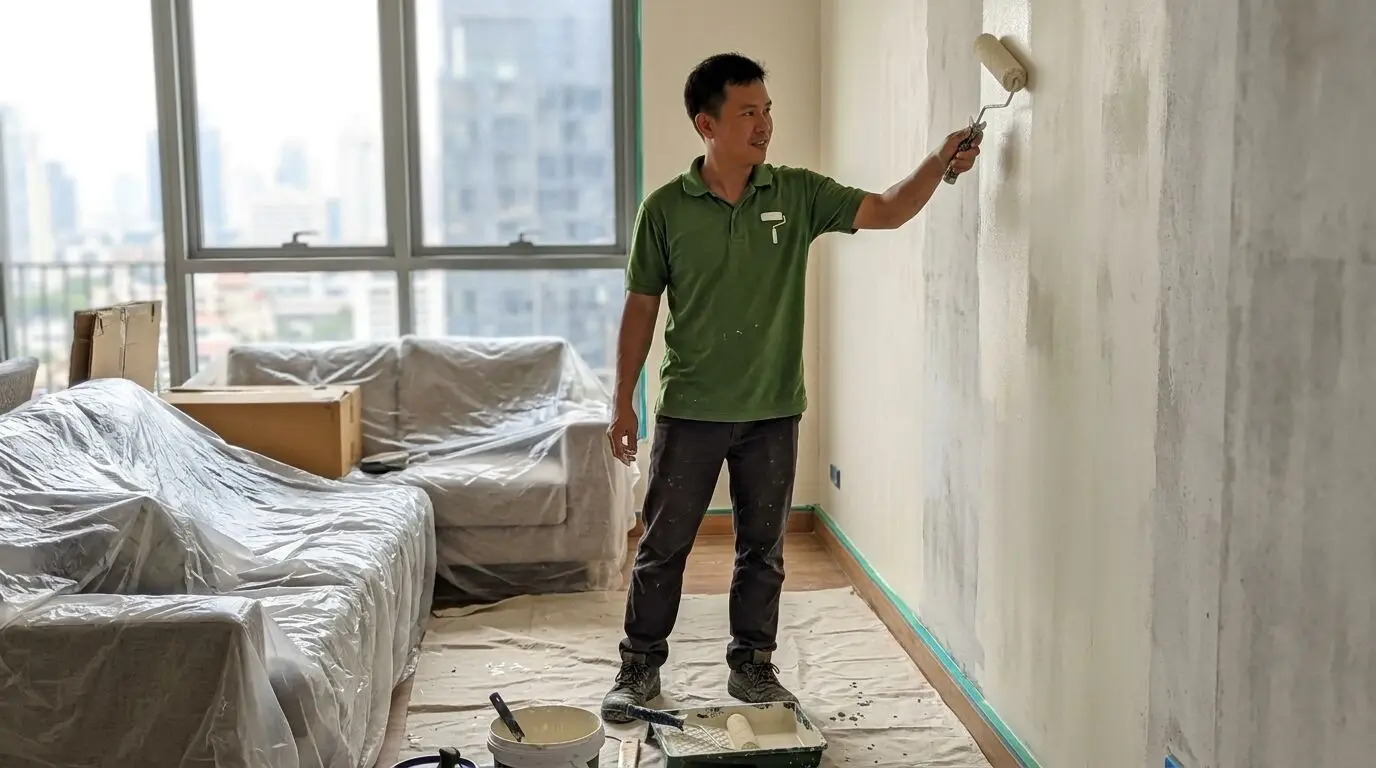
Repainting a bedroom raises an obvious question at about ten o'clock that night: can I sleep in here? The walls feel dry. The smell says otherwise.
This guide explains what that smell is, why it lingers more in Bangkok condos than you might expect, and how to plan a repaint so that it never becomes a problem. It is general information, not medical advice. If you are pregnant, have a newborn, or someone in the home has asthma or another breathing condition, ask your doctor.
What the smell actually is
Paint smell comes mostly from volatile organic compounds, or VOCs: chemicals that evaporate from the paint as it dries. Some come from the solvents, some from additives such as coalescents and preservatives.
The US Environmental Protection Agency lists paints among the household products that release VOCs, notes that indoor concentrations of many VOCs are consistently higher than outdoors, and advises increasing ventilation when using products that emit them (EPA, Volatile Organic Compounds' Impact on Indoor Air Quality).
Two things help a great deal.
- Modern interior wall paints are mostly water-based. Acrylic and emulsion paints release far fewer VOCs than the solvent-based paints of the past. Most of what they release comes out in the first hours and days.
- Emissions drop quickly. Paint smell is strongest while the paint is wet and fades as it dries and cures. With good airflow, most of the smell from a water-based wall paint is gone within a day or two.
Why the smell lingers in Bangkok rooms
In many countries you would paint with the windows open and the smell would clear overnight. Bangkok homes work differently.
- Rooms are sealed for air-conditioning. Windows stay shut and the air-conditioner recirculates the same indoor air. It cools it and removes moisture, but it does not remove paint fumes.
- High humidity slows drying. Water-based paint dries by losing water to the air. In humid air, that takes longer, and the paint keeps releasing smell for longer.
- Many condo bedrooms have one small window or none that opens fully.
So the single most effective step is simple: let outdoor air through the room. Open the window and the bedroom door, and put a fan in the window blowing outwards, so fresh air is drawn in through the rest of the home. Keep this up through the day of painting and the evening after.
When to sleep in the room
There is no single safe number of hours for everyone, because it depends on the paint, the room, the airflow and the person. These are sensible, cautious rules of thumb.
Healthy adults. Once the paint is dry and the room has been well ventilated, most people sleep in it the following night. If the smell is still strong at bedtime, sleep elsewhere another night and keep the fan running.
Babies and young children. Be more cautious. Keep them out of a freshly painted room until there is no paint smell at all — often a few days with good ventilation. For a nursery, the best plan is to paint weeks before the baby arrives.
Pregnancy. Many people prefer not to paint or to sleep in a newly painted room while pregnant. Choose a low-odour paint, have someone else do the work, ventilate well, and sleep in another room until the smell has gone. Your doctor can advise you.
Asthma, allergies or other breathing conditions. People who react to strong smells should wait until there is no smell, and may want to stay elsewhere on painting day.
Pets. Keep cats and dogs out until the paint is dry and the smell has faded, and away from wet walls and open tins. Pet birds are particularly sensitive to fumes and should be moved well away from any room being painted.
If anyone feels headachy, dizzy, nauseous or short of breath, leave the room, get fresh air and ventilate more. If symptoms continue, seek medical advice.
Choosing a lower-odour paint
You can reduce the smell before the first coat goes on.
- Look for low-odour or low-VOC interior ranges. Major brands sold in Thailand, including TOA and Nippon Paint, offer low-odour interior paints. RenoRova's standard paint is Nippon Odour-less, chosen partly for this reason.
- Read the label. VOC content, where given, is usually stated in grams per litre. Lower is better.
- Look for an environmental label. Thailand's Green Label scheme (ฉลากเขียว) certifies products that meet environmental criteria, including for paints.
- Watch the other products. Wall paint is often not the strongest smell. Oil-based enamels for doors and metal, stain-blocking primers, epoxy grout, panel adhesives and some sealants smell much stronger. Ask your painter which products will be used, and schedule those for when the room can be left to air.
How to plan a repaint around your life
The best way to avoid the question "can I sleep in here?" is to plan the order of work.
- Paint bedrooms first thing in the morning, so they have the whole day to dry and air.
- Sleep in another room the first night if you can, especially for children.
- Work room by room in a larger home, so there is always somewhere clean to sleep.
- Paint the nursery early. Weeks, not days, before it is needed.
- Keep tins closed and out of living areas. Paints can keep releasing VOCs while they are stored, and the EPA advises buying in quantities you will use soon and disposing of unused containers safely. Keep a sealed tin of each colour for touch-ups somewhere ventilated, out of reach of children and pets.
- Do the smelly jobs last. If doors need an oil-based enamel, do them on a day you can leave the windows open.
After painting: other common questions
When can furniture go back? Usually the same day once the walls are dry to the touch. Leave a small gap between furniture and the wall for the first day so nothing sticks to fresh paint.
When can I hang pictures? Wait at least a day before putting nails in. Paint keeps curing for some time after it feels dry. Adhesive strips and hooks are different: their makers usually ask for a longer wait after painting, so check the packet.
When can I wash the walls? Gentle wiping is fine after a few days. Save scrubbing for later, when the paint has fully cured.
How RenoRova paints occupied homes
Most of our interior painting is done in homes where people are living. Furniture is wrapped and moved, floors are covered, and the paint is TOA SuperShield or Nippon Odour-less as standard, two full coats, with primer only where the wall needs it. We sequence the work so bedrooms are painted early in the day, ventilate as we go, and take empty tins and all waste away with us.
For colour choice, see choosing paint colours for a Bangkok condo. For costs, see interior painting prices in Bangkok. If anyone in your home is sensitive to smells, tell us when you book and we will plan the order of rooms and the products around it.
Frequently asked questions
How long after painting can you sleep in a room?
With modern water-based interior paint and good ventilation, many people sleep in the room the following night, once the paint is dry and the smell has mostly faded. If the smell is still strong, sleep elsewhere for another night and keep ventilating. This is general guidance, not medical advice.
Is paint smell harmful for babies?
Babies are more sensitive to indoor air pollutants than adults, so be more cautious. Keep babies out of a freshly painted room until there is no smell at all, ventilate well, and ideally paint a nursery weeks before the baby arrives. Ask your doctor or paediatrician if you have concerns.
Is it safe to sleep in a freshly painted room when pregnant?
Many people prefer to avoid it. Choose low-odour, low-VOC paint, let someone else do the painting, ventilate well, and sleep in another room until the smell has gone. Your doctor can advise on your own situation.
Is paint smell bad for cats and dogs?
Keep pets out of the room until the paint is dry and the smell has faded, and away from open tins and wet walls. Pet birds are especially sensitive to fumes and should be moved well away from any room being painted.
How long after painting can I hang pictures?
Paint is usually dry to the touch within hours but takes longer to cure fully. Wait at least a day before hanging pictures with nails, and check the instructions for adhesive strips and hooks, which usually ask for a longer wait after painting.
Need it handled professionally?
Get a guide price for your home in under 60 seconds.
Written by the RenoRova Team
We're Bangkok's documented renovation crew — everything we write comes from real painting, regrouting and flooring jobs across condos, homes and short-stay rentals.
Get our Bangkok renovation guides straight in Google — add RenoRova as a preferred source.